

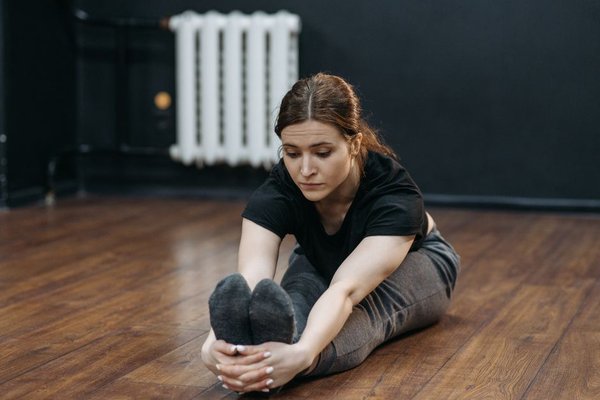
Your workout may be finished, but your body is still catching up. Breathing remains quick, your heart is beating faster, and your muscles are warm. Instead of stopping abruptly, spend a few minutes easing back toward rest. Learning how to cool down after a workout is mostly about making that transition comfortable, not completing another demanding routine.
A good cool-down can be as simple as slowing your pace, moving gently, and adding a stretch or two if you like. It does not need specialist equipment or a complicated checklist.
Start by lowering your intensity
After running, shift to a jog and then a walk. Following a bike ride, pedal slowly with minimal resistance. At the end of a brisk walk, gradually shorten your stride. For many moderate or vigorous sessions, aim for roughly five to ten minutes of easy movement.
Your breathing should gradually become easier and you should be able to speak comfortably. Do not chase a precise heart-rate reading. How you feel matters more than reaching a number on a watch.
Why an easy finish can help
Exercise changes circulation, breathing, and blood pressure. Stopping suddenly after sustained effort can make some people feel light-headed. Gentle movement lets the shift from activity to rest happen more gradually. The American Heart Association recommends easing off exercise rather than stopping at full intensity.
That is the main practical purpose of a post workout cool down. It is a brief transition, not a guaranteed way to prevent injury or eliminate soreness.
Simple cool down exercises to try
Walk for a few minutes
Walking works after almost any workout and requires no equipment. Step off a treadmill only after reducing its speed, or stroll around the room after your last circuit. Relax your shoulders and allow your breathing to settle naturally.
Move your joints gently
Try slow shoulder circles after upper-body training, or easy ankle movements after a run. Keep the movements comfortable and controlled. There is no need to push through tightness or make a joint move farther than it wants to.
Stretch if it feels useful
After workout stretching is optional but can be a pleasant finish. To stretch your calves, face a wall, place one foot behind you, and keep the back heel down as you lean forward slightly. For a standing thigh stretch, hold a stable support and gently bring your heel toward your buttock.
Hold each stretch for about 15 to 30 seconds, switch sides, and breathe normally. Aim for a mild pulling sensation, never pain. Avoid bouncing. If one area feels particularly tight, choose a gentle stretch for that area instead of forcing yourself through a full-body sequence.
An eight-minute cool-down after running
Imagine finishing a challenging 30-minute run at the park. For the first two minutes, slow to a very easy jog or brisk walk. Spend the next three minutes walking at a pace that allows a relaxed conversation. Then use about two minutes for a calf stretch and standing thigh stretch, changing sides. Finish with one more minute of easy walking.
This is an example, not a strict schedule. If you are still breathing heavily, walk a little longer. If time is short, prioritize gradually reducing your pace rather than squeezing in numerous stretches. You can follow the same pattern on a treadmill or exercise bike.
Match the routine to your workout
After strength training
Heavy squats, deadlifts, and demanding circuits can leave you breathing hard. Walk around for a few minutes after your final set, then consider gentle hip or shoulder movements. Intense stretching is unnecessary, especially when muscles already feel fatigued.
After intervals or hard cardio
Reduce speed or resistance in stages. High-intensity efforts create a sharper contrast between work and rest, so allow enough easy movement to feel comfortable before stopping.
After yoga or light activity
A relaxed session may need little extra time. A few slow steps and normal breathing may be sufficient. The best cool-down fits the effort you actually performed.
What a cool-down cannot promise
Some stretching routines claim to flush out lactic acid, prevent every injury, or stop next-day muscle soreness. Those promises go beyond the evidence. A Cochrane review found that stretching before or after exercise makes little or no meaningful difference to delayed-onset muscle soreness.
Stretching may still be worth doing for comfort and as part of a consistent flexibility routine. Just do not mistake a pleasant sensation for proof of faster muscle repair. Exercise recovery also depends on manageable training loads, sufficient sleep, and appropriate food and fluids.
Think of a warm-up before exercise, a gentle mobility routine, and rest-day recovery habits as complementary parts of training. Each serves a different purpose, and none needs to be elaborate to be useful.
Pay attention to comfort and safety
If you exercised in the heat, move toward shade or a cooler place as you finish. Drink fluids according to thirst and how much you have been sweating. Before driving or tackling another demanding task, check that you feel steady.
Chest pain, fainting, severe breathlessness, or persistent significant dizziness are not signals to continue walking them off. Stop and seek urgent medical care when appropriate. If you have an injury, a heart condition, or another medical concern, follow individualized advice from a healthcare professional.
Frequently asked questions
How long should you cool down after a workout?
Five to ten minutes of easier movement is a useful starting point after many workouts. A brief, gentle session may need less, while hard cardio may benefit from a longer gradual finish. Adjust to your breathing and comfort.
Do you have to stretch after exercising?
No. Stretching is optional. You can still cool down effectively by reducing your pace and moving gently. Include stretches if you enjoy them or are working on flexibility, but do not force painful positions.
Will a cool-down prevent sore muscles tomorrow?
Not reliably. Research does not show that post-exercise stretching substantially prevents delayed-onset soreness. Gradual training progression, rest, nutrition, and sleep remain important for recovery.
Can you sit down immediately after lifting weights?
After a demanding set, it is sensible to walk gently and let your breathing settle first. If you feel unwell or dizzy, respond to those symptoms rather than trying to complete a routine mechanically.
Finish with less effort, not more
To cool down after a workout, ease your activity down, breathe comfortably, and add gentle movement or stretching when it suits you. A simple, repeatable finish is usually more useful than an elaborate ritual. Save the real work for your next training session and give recovery the attention it deserves afterward.
