

For many people, the conversation about endometriosis changes when pregnancy enters the picture. Pain that was once managed from month to month becomes part of a larger question: Will conception be difficult, will treatment need to change, and what might pregnancy itself look like?
There is no single answer. Endometriosis and pregnancy challenges vary widely. Some people conceive without assistance and have uncomplicated pregnancies. Others need surgery, fertility treatment, or more time than expected. The diagnosis can influence reproductive health, but it does not determine the outcome in advance.
How Endometriosis May Affect Fertility
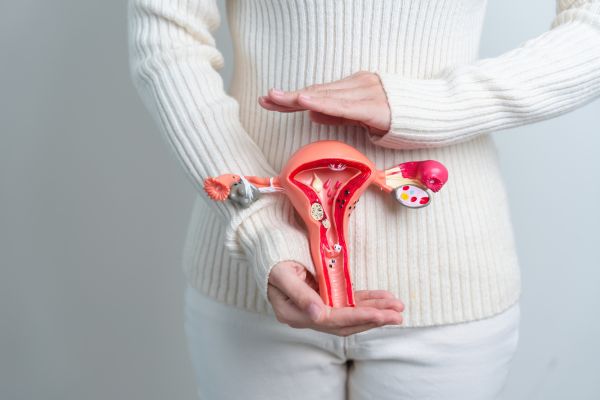
Endometriosis occurs when tissue similar to the lining of the uterus grows elsewhere, commonly around the ovaries, fallopian tubes, and pelvic cavity. It can cause inflammation, scar tissue, adhesions, and ovarian cysts called endometriomas.
Fertility may be affected in several ways. Adhesions can distort the tubes or interfere with the movement of an egg. Inflammation may affect eggs, sperm, fertilisation, or the environment in which an embryo develops. Endometriomas can involve ovarian tissue, while pain during sex may make intercourse around ovulation difficult. In more advanced disease, the fallopian tubes may become blocked.
Endometriosis Does Not Automatically Mean Infertility
One of the most frightening assumptions is that endometriosis makes pregnancy impossible. It can reduce fertility, yet many people with the condition conceive naturally. European Society of Human Reproduction and Embryology guidance estimates that roughly 60 to 70 percent of women with endometriosis are fertile and can become pregnant spontaneously.
Disease stage does not always predict an individual’s experience neatly. Someone with mild-looking disease can have difficulty conceiving, while another person with extensive lesions may become pregnant without treatment. Age, ovarian reserve, sperm health, tubal function, previous surgery, adenomyosis, and the length of time spent trying all matter.
That uncertainty can be exhausting. Each menstrual cycle may feel like a judgment on the body, even when the complete fertility picture is still unknown. A proper assessment can replace some of that fear with clearer information.
When to Seek Fertility Advice
General guidance often suggests an infertility evaluation after one year of regular unprotected intercourse when the female partner is under 35, or after six months at 35 or older. A known condition that may affect fertility, including endometriosis, can be a reason to speak with a clinician sooner.
An evaluation may consider ovulation, ovarian reserve, ultrasound findings, whether the fallopian tubes appear open, and semen factors when relevant. Personal priorities matter too. Some people want to try naturally for longer. Others are worried about age, severe pain, previous operations, or an ovarian endometrioma and prefer earlier specialist input.
Balancing Pain Relief With Pregnancy Plans
Hormonal treatments can be effective for controlling endometriosis-related pain, but most work by suppressing ovulation, menstruation, or both. They are not treatments for achieving pregnancy while they are being used. Clinical guidance states that hormonal suppression does not improve spontaneous pregnancy rates in people with endometriosis-associated infertility.
This creates a difficult tension. Stopping medication to try for a baby may allow pain to return, while continuing it postpones conception. Decisions should consider age, symptom severity, previous treatment, and how soon pregnancy is desired.
Pregnancy should not be treated as a cure. Symptoms may improve while periods stop, but relief is not guaranteed, and endometriosis can remain or become painful again after pregnancy.
Deciding Whether Surgery Is Appropriate
Laparoscopic surgery can remove lesions, release adhesions, and treat endometriomas. In selected cases, it may improve the chance of natural conception and reduce pain. However, surgery is not automatically the right first step for everyone.
Operations on ovarian endometriomas require particular care because removing a cyst can also damage healthy ovarian tissue and reduce ovarian reserve. Repeated ovarian surgery may increase that concern. Clinical guidance advises discussing this risk and notes that surgery before IVF has not consistently been shown to improve pregnancy chances.
The decision is strongest when it is individualised rather than based on the idea that every visible lesion must be removed before pregnancy.
When IUI or IVF Enters the Conversation
Assisted reproduction can help when natural conception has not occurred or when other fertility factors are present. Intrauterine insemination, sometimes combined with ovarian stimulation, may be considered in selected cases of milder disease with open tubes and suitable sperm results.
IVF may be recommended when the tubes are damaged, ovarian reserve is a concern, other treatments have failed, or time is especially important. IVF allows eggs and sperm to meet in a laboratory rather than inside the fallopian tube. Assisted reproductive technology is considered an appropriate and generally safe option for endometriosis-associated infertility.
The right route depends on the entire fertility picture, not the diagnosis alone.
Understanding Pregnancy Risks Without Panic
Most people with endometriosis who become pregnant do not experience a severe complication caused by the condition. Research has nevertheless found possible associations with first-trimester miscarriage and ectopic pregnancy. Studies have also reported links with preterm birth and placenta previa, although results are inconsistent and affected by differences in disease type, conception method, and study design.
Current guidance says these findings should not discourage pregnancy or automatically require extra antenatal monitoring solely because of endometriosis. A pregnant person should still tell the midwife or obstetric clinician about the diagnosis, previous pelvic surgery, organ involvement, and any fertility treatment used.
Early Pregnancy Symptoms Need Attention
Bleeding and cramping can occur in healthy pregnancies, so they do not always indicate a loss. Still, endometriosis is associated with a possible increase in ectopic pregnancy risk, making early symptoms important.
Vaginal bleeding, worsening abdominal or pelvic pain, pain mainly on one side, shoulder-tip pain, dizziness, or fainting require prompt medical assessment. Severe pain, collapse, or heavy bleeding is an emergency. Ultrasound and blood testing may be used to confirm where the pregnancy is developing.
The Emotional Strain Matters Too
Endometriosis and pregnancy challenges are not purely physical. Fertility appointments, timed intercourse, treatment decisions, and fear during early pregnancy can take over everyday life. Someone may feel grief before a definite loss has occurred or guilt for feeling anxious during a pregnancy they worked hard to achieve.
Honest communication can help. Partners may need to talk about pain, sex, finances, and emotional limits. Counselling, peer support, trusted relatives, or a healthcare team that listens can make the process feel less isolating.
Moving Forward With Realistic Hope
Endometriosis can complicate the path to pregnancy, but complexity is not the same as impossibility. Natural conception, surgery, IUI, IVF, and fertility-preservation discussions may each have a place, depending on age, symptoms, ovarian health, disease location, and personal priorities.
The most helpful approach is neither false reassurance nor fear. It is informed planning, timely assessment, and care shaped around the individual. Pregnancy may happen quickly, slowly, or with medical assistance. Whatever the route, people facing endometriosis deserve accurate information, compassionate support, and space to make decisions at their own pace.
This article provides general health information and does not replace advice from a qualified clinician who knows an individual’s medical history.
