

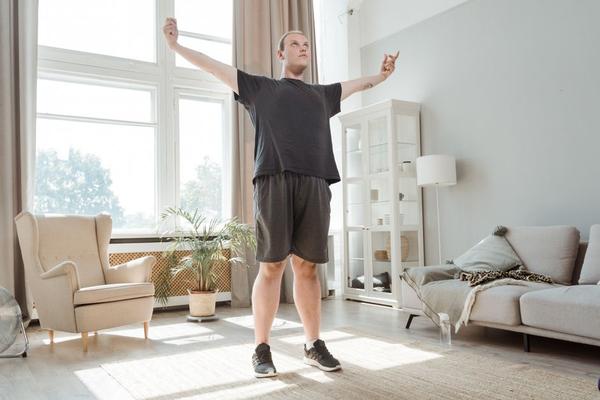
A full body workout at home does not require expensive equipment or a dedicated exercise room. With enough floor space to stretch your arms and take a step backward, you can train your legs, upper body and core. The difference between a useful routine and a random collection of exercises is balance: you need movements that challenge several muscle groups, not just endless squats and crunches.
This no gym workout uses simple movements you can adapt to your current fitness. It includes strength, stability and a short cardio finish, along with a realistic plan for getting stronger over time.
Prepare Your Space and Warm Up
Move loose rugs and furniture out of the way. Wear shoes with traction if your floor is slippery, and choose a stable countertop for incline push-ups. A backpack containing a few books is optional for an upper-back exercise; you do not need to buy weights.
Spend three to five minutes marching in place, making comfortable shoulder circles, moving your hips and doing gentle squats. The warm-up should help you feel ready, not leave you breathless. If you have a health condition, recent injury or symptoms aggravated by exercise, seek individual guidance before starting.
Your 25-Minute Home Full Body Workout
Complete the exercises below in order. Beginners can start with one round; build toward two or three as stamina improves. Rest for about 30–60 seconds between movements, or longer when needed. Choose repetitions you can finish with controlled technique rather than rushing to keep up with a timer.
1. Squats for Legs and Hips
Stand with feet approximately shoulder-width apart. Bend your hips and knees as if sitting onto a chair, then return to standing. Keep your feet grounded and knees tracking comfortably over your toes. Aim for 8–12 repetitions. A chair squat, where you briefly sit and stand, is a practical beginner alternative.
2. Incline Push-Ups for Chest and Arms
Place your palms against a sturdy wall or countertop. Step back until your body forms a straight line, bend your elbows and press away. Try 6–12 repetitions. Wall push-ups are easier; using a lower, stable surface increases difficulty. Avoid furniture that could slide or tip over.
3. Reverse Lunges for Single-Leg Strength
Step backward with one leg, bend both knees to a comfortable depth and return to standing. Alternate sides for 6–10 repetitions per leg. Hold a wall for balance if necessary. Lunges complement squats by challenging each leg separately and requiring more stability.
4. Glute Bridges for the Back of Your Body
Lie on your back with knees bent and feet flat. Press through your feet to raise your hips, pause, then lower slowly. Do 10–15 repetitions without excessively arching your lower back. This hip-extension exercise puts useful emphasis on your glutes.
5. Rows or W Raises for Your Upper Back
Push-ups train pushing muscles, so include an upper-back movement too. For rows, hold a securely closed, lightly loaded backpack, hinge forward at the hips and pull it toward your lower ribs. Start with 8–12 smooth repetitions, keeping your back steady.
For a completely equipment-free option, lie face down, position your arms in a W shape and gently lift them while squeezing your shoulder blades. Repeat 8–12 times. W raises develop upper-back control but provide less resistance than rows. A resistance band can offer more pulling work later.
6. Dead Bugs for Core Stability
Lie on your back with arms raised and knees bent above your hips. Slowly extend one leg and the opposite arm, return, then switch. Perform 5–8 controlled repetitions on each side. Make the movement smaller if you cannot prevent your back from arching.
7. Marching or Step Jacks for Cardio
Finish each round with 45–60 seconds of brisk marching or step jacks. For step jacks, step sideways while raising your arms rather than jumping. Your breathing should increase, but you should remain in control. This short burst complements, rather than replaces, your weekly aerobic activity.
Make the Routine Easier or Harder
If you are returning to exercise, start with one round and fewer repetitions. Someone with only fifteen minutes before work could warm up, complete one careful circuit and walk later in the day. That is a better foundation than doing too much once and skipping the rest of the week.
When a round becomes comfortable, add repetitions, another circuit or a slower lowering phase. Change one variable at a time. The final repetitions should feel challenging without forcing you to sacrifice form. For further ideas, a beginner bodyweight strength progression can help you move beyond basic variations safely.
How to Schedule Strength, Cardio and Recovery
Try this total body exercise session on two nonconsecutive days, such as Monday and Thursday. As your fitness improves, you may prefer three sessions if you recover well. Use other days for walking, cycling or low-impact cardio at home.
Current CDC guidance recommends adults accumulate at least 150 minutes of moderate-intensity aerobic activity per week, alongside muscle-strengthening activity on two or more days. You can spread that cardio across shorter sessions rather than doing it all at once. Rest and manageable progression matter too; a guide to recovery between strength workouts can help you plan easier days.
Small Changes That Improve Your Results
Keep a quick record of your rounds, repetitions and how difficult the session felt. If squats become easy while push-ups still feel hard, progress those exercises separately. Consistency does not require every movement to advance at the same rate.
Do not neglect your back, hold your breath through every repetition or speed up when technique deteriorates. Stop exercising if you experience chest pain, dizziness, sharp pain or unusual breathlessness, and seek appropriate medical advice.
Frequently Asked Questions
Can you build muscle without a gym?
Yes. Muscles adapt when resistance becomes sufficiently challenging. Bodyweight exercises can develop strength, especially for beginners, although adding safe resistance may eventually help you train your back and legs more effectively.
Is 20 minutes enough for a home fitness routine?
Twenty focused minutes can be useful. Training quality and regular practice matter more than a fixed session length. Short strength sessions can sit alongside walks and other movement during the week.
Should I do a full body workout every day?
Not necessarily. Two well-planned strength sessions a week are a sensible starting point for many adults. Let your muscles recover and adjust your schedule according to your abilities.
What if push-ups or lunges are too difficult?
Use wall push-ups and a shallow, supported lunge. Chair squats are another alternative if balance is limited. Choose a comfortable range and increase the challenge gradually.
Keep Your Home Routine Sustainable
A balanced home workout covers legs, upper body, core and some cardio without needing a gym membership. Start with the version you can perform well, build difficulty gradually and make room for recovery. Repeating a manageable routine is what turns a single workout into lasting fitness progress.
